Binaural Beats For Writers: Unlock Your Creative Potential And Write More Productively
Discover how binaural beats for writers can enhance productivity, unlock creativity, and help you achieve flow state. Learn the best frequencies for writing.

You sit down at your desk, coffee in hand, cursor blinking on a blank page.
Minutes pass.
You check your phone, reorganize your notes, and glance at the clock—your deadline is creeping closer, but the words refuse to come.
If this scenario feels painfully familiar, you are not alone.
Every writer battles distraction and mental resistance.
But what if a simple audio tool could shift your brain into a more productive gear?
Binaural beats for writers offer exactly that: a science-backed method to sharpen focus, dissolve creative blocks, and help you slip into a flow state where words pour onto the page almost effortlessly.
Binaural beats work through an auditory illusion.
When two slightly different sound frequencies play in each ear simultaneously, your brain perceives a third tone—the mathematical difference between the two.
This phenomenon, known as brainwave entrainment, gently nudges your neural activity toward the frequency of that perceived tone.
The result is a measurable shift in your mental state, and for writers, that shift can make the difference between a frustrating session and a breakthrough one.
Key Takeaways

- Binaural beats use brainwave entrainment to help writers achieve optimal mental states for productivity.
- Different frequencies target specific writing needs: alpha waves for creativity, beta waves for concentration, and theta waves for imagination.
- Stereo headphones are essential for binaural beats to work effectively.
- Writers report improved focus, reduced writer's block, and enhanced flow state when using binaural beats regularly.
- Frequencies between 10–20 Hz are particularly effective for most writing tasks.
What Are Binaural Beats And
How Do They Work?

Understanding how to use binaural beats for writing starts with knowing what they actually are.
A binaural beat is an auditory illusion your brain creates when it receives two tones of slightly different frequencies—one in each ear.
If your left ear hears a tone at 200 Hz and your right ear hears one at 210 Hz, your brain perceives a third tone pulsing at 10 Hz. That perceived pulse is the binaural beat.
This process triggers brainwave entrainment, meaning your neural oscillations begin to synchronize with the frequency of that third tone.
Because different brainwave frequencies correspond to different mental states—relaxation, alertness, deep focus—you can essentially guide your brain toward the state you need.
This is why headphones are non-negotiable: each ear must receive a distinct frequency for the illusion to occur.
The Science Behind Brainwave Entrainment
Your brain operates across several frequency bands throughout the day.
(** Some nerdy-tech stuff coming up!)
Delta waves (0.5–4 Hz) dominate deep sleep, theta waves (4–8 Hz) appear during light sleep and daydreaming, alpha waves (8–14 Hz) emerge when you are calm yet alert, and beta waves (14–30 Hz) characterize active, focused thinking.
Gamma waves (30–90 Hz) are linked to higher-level cognitive function enhancement and complex problem-solving.
Research published in journals such as Frontiers in Psychiatry and Psychological Research has shown that binaural beats can influence mood, attention, and cognitive performance.
By selecting a specific Hz frequency for focus or creativity, writers can tap into these neural patterns deliberately rather than waiting for inspiration to strike on its own.
Best Binaural Beats Frequencies For Writers

Not all frequencies serve the same purpose, and the best binaural beats for focus differ from those designed to spark imagination.
Choosing the right Hz frequency for focus versus creativity is key to getting the most out of each session.
Alpha Waves for Creative Writing (8–14 Hz)
Alpha waves promote a relaxed yet focused mental state—exactly the sweet spot for creative writing.
When your brain operates in the alpha range, the internal critic quiets down, and ideas flow more freely.
This frequency band is ideal for brainstorming, journaling, free-flowing drafts, and research-heavy learning sessions.
A 10 Hz binaural beat is particularly popular among writers seeking flow state writing because it sits right in the middle of the alpha range.
Many users report fewer distractions and a noticeable boost in idea generation when they write with alpha waves for creative writing playing through their headphones.
Beta Waves for Writing Concentration (14–30 Hz)
When your task demands sharp analytical thinking—editing a manuscript, crafting technical content, or powering through structured articles under a deadline—beta waves writing concentration tracks are your best ally.
Beta frequencies support active alertness and sustained attention, making them excellent focus and concentration music for goal-oriented work.
The 14–20 Hz range tends to be most effective for writing-related concentration.
Research has highlighted 15 Hz and 40 Hz as frequencies with measurable benefits for attention and cognitive processing.
Writers who struggle with mind-wandering during revision often find beta-range tracks keep them locked in.
Theta Waves for Imagination and Deeper Creativity (4–8 Hz)
Theta waves are associated with deep relaxation, daydreaming, and subconscious processing—making them powerful for overcoming blocks and accessing theta waves imagination.
If you are stuck on a plot point, searching for an emotional core in a personal essay, or trying to connect abstract ideas, theta frequencies can help your mind wander productively.
A 6 Hz binaural beat has been specifically noted in research for its ability to facilitate creative insight.
Because theta is a slower frequency, it works best during reflective pre-writing or brainstorming rather than rapid drafting.
Gamma Waves for Complex Problem-Solving (30–90 Hz)
Gamma waves link to the highest levels of cognitive processing, including the ability to synthesize disparate ideas into a coherent whole.
For writers managing complex narrative structures, weaving multiple storylines, or editing for overall coherence, gamma waves creativity tracks can sharpen that big-picture thinking.
A 40 Hz gamma beat has been associated with improved memory consolidation and cognitive function enhancement.
The link between gamma waves creativity and higher-order thinking makes these tracks especially useful for content creators juggling multiple projects who need to see how all the pieces fit together.
(Whew! We made it through those techno sections...)
How Binaural Beats Help Overcome
Writer's Block

Writer's block rarely has a single cause. It is usually a cocktail of anxiety, overthinking, mental fatigue, and an overly active inner critic.
Binaural beats for writers address these obstacles at the neurological level, creating conditions where creativity can surface naturally.
By guiding your brainwaves toward calmer, more focused states, binaural beats reduce the stress response that often underlies creative paralysis.
They filter out both external noise and the distracting internal chatter that keeps you second-guessing every sentence.
Over time, regularly using binaural beats to overcome writer's block trains your brain to associate the audio cue with productive writing, making it easier to transition into a creative mindset on demand.
This is why so many authors now rely on binaural beats to overcome writer's block as a core part of their workflow.
The connection to flow state writing is significant.
Flow—that immersive state where time seems to vanish and words arrive without struggle—becomes more accessible when your brainwaves are already primed for it.
Binaural beats act as a reliable on-ramp to that experience, and many writers describe flow state writing as the single biggest benefit they gain from the practice.
How to Use Binaural Beats For
Writing Productivity
Binaural beats writing productivity gains come from consistent, intentional practice. Here is a step-by-step guide to integrating them into your writing routine:
- Choose quality stereo headphones. Binaural beats require each ear to receive a separate frequency, so stereo output is essential.
Look for a comfortable pair with a neutral frequency response—you do not need expensive audiophile equipment, but avoid very cheap earbuds that distort sound. - Select the right frequency for your task. Match your choice to your goal: alpha (8–14 Hz) for creative drafting, beta (14–20 Hz) for editing and structured writing, theta (4–8 Hz) for brainstorming, or gamma (30+ Hz) for complex problem-solving.
- Minimize other distractions. Close unnecessary tabs, silence your phone, and set your workspace up for focus. Binaural beats work best when they are the primary background noise for writing, not competing with television or conversation.
- Start with shorter sessions. Begin with 10–20 minutes and gradually increase to 45–60 minutes as you become comfortable. Many popular tracks run exactly one hour, which makes them a natural content creation productivity tool for batching work into timed sprints.
- Establish a daily routine. Consistency amplifies results. When your brain learns to associate the audio with writing, it transitions into a productive state faster each time.
- Experiment with different frequencies. Individual sensitivity varies. Track which frequencies produce your best output for different types of writing so you can build a personalized playlist.
The Benefits Writers Experience With
Binaural Beats

Binaural beats for writers deliver a range of practical advantages that compound over time.
Writers who adopt this tool regularly report noticeable improvements across several dimensions of their creative practice:
- Enhanced focus and concentration during writing sessions
- Improved ability to enter and sustain flow state
- Reduced mental fatigue during long writing marathons
- Better time management through structured listening sessions
- Decreased procrastination and increased motivation to start
- Development of consistent, dependable writing habits
- Enhanced creativity and more prolific idea generation
- Reduced impact of environmental distractions and noise
Choosing the Right Equipment For
Binaural Beats

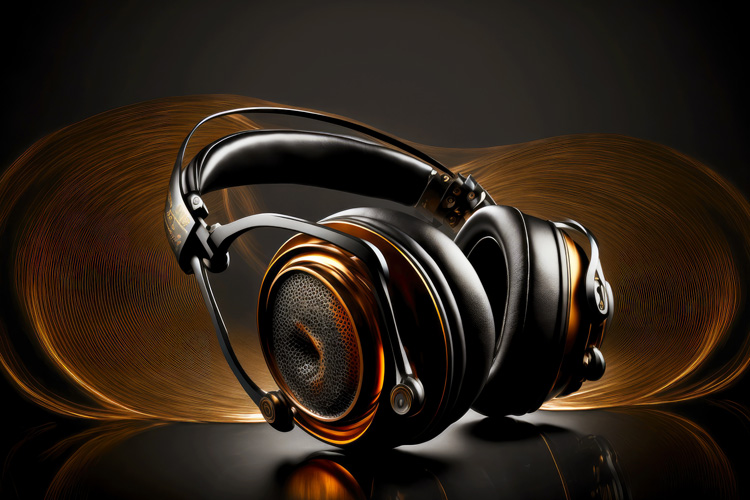
Your headphones are the single most important piece of equipment for an effective binaural beats experience.
Because the technique relies on delivering distinct auditory illusion frequencies to each ear, a reliable stereo pair is non-negotiable.
Look for headphones or earbuds with a balanced, neutral sound profile.
You do not need studio monitors, but avoid extremely budget options that muddy or distort the frequencies.
Comfort matters too—if you plan to write for an hour or more, over-ear headphones with cushioned pads or lightweight in-ear buds designed for extended wear are both excellent choices.
Quality audio tracks and well-constructed headphones can make a meaningful difference in your results.
Building Your Binaural Beats Writing Practice

The most effective way to benefit from binaural beats for writers is to weave them into a routine you already follow.
If you use the Pomodoro technique, try playing a beta-frequency track during your 25-minute work sprints.
If you prefer time blocking, dedicate the first block of your day to creative drafting with alpha waves and switch to beta during your editing block.
Keep a simple log noting the frequency you used, the type of writing you did, and how productive the session felt.
Over a few weeks, patterns will emerge that help you fine-tune your approach.
Combining binaural beats with other content creation productivity tools—such as distraction blockers, writing prompts, or word-count targets—creates a layered system that reinforces cognitive function enhancement across your entire workflow.
Set realistic expectations. Binaural beats are not magic; they will not write your novel for you.
But as a tool for steering your mental state toward focus and creativity, they are remarkably effective when used consistently.
Conclusion: Binaural Beats For Writers

Binaural beats for writers represent one of the most accessible, low-cost tools available for boosting creative output.
By leveraging brainwave entrainment, you can guide your mind into the precise state each writing task demands—whether that is relaxed creativity with alpha waves, sharp concentration with beta frequencies, or deep imagination with theta tones.
The key is to experiment.
Try alpha waves during your next brainstorming session and beta waves when you sit down to edit.
Track your results, refine your frequency choices, and build a practice that supports your unique creative process.
With quality headphones and a reliable set of binaural beat tracks, you have everything you need to unlock a more focused, productive, and inspired writing life.
Your next great piece of writing might be just one frequency away.
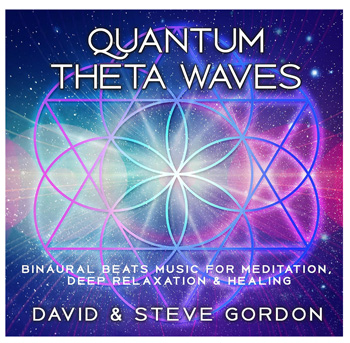
CLICK HERE to discover more about these sounds.
Filed Under: Binaural Beats For Writers
More Books For Spiritual Growth
Recent Articles


-
Spiritual Connection In Grand Teton: A Guide for Content Creators
 Spiritual connection in Grand Teton is offered through sacred landscapes, meditation spots, and hikes that will elevate your travel content and storytelling.
As an Amazon Associate I earn from qualifying purchases.





All rights reserved. Copyright 2016-2026.
Oceanside 7 LLC is a participant in the Amazon Services LLC Associates Program, an affiliate advertising program
for sites to earn advertising fees and linking to Amazon.com